THE SWEET PROMISE OF ELECTIONS TO EDUCATION IN INDONESIA
Penulis: Astri Jelita Rahmawati
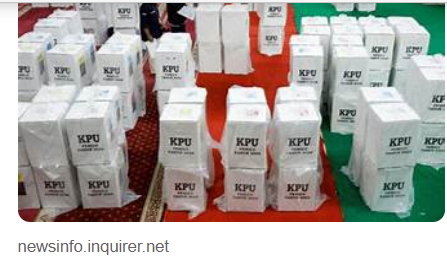
Ilustrasi
Oleh Astri Jelita
Rahmawati
(Mahasiswi Jurusan
Sastra Inggris UIN Sunan Gunung Djati Bandung)
Education is one
of the sectors that is often promised in every political campaign, including in
regional head elections (Pilkada). These promises are often used as a tool to
attract support from the community. However, in reality, many of these promises
are not fulfilled after the leaders are elected.
According to the
Chairperson of the Indonesian Postgraduate Student Forum, Sitti Hikmawatty,
Tuesday (23/12) in Bandung, in the era of regional autonomy, ahead of regional
head elections or general elections, many voiced promises to improve education.
The promise is used as the main weapon to attract as many votes as possible.
"Usually what is voiced is free education, education equality, and quality
smart education," she said in a National Seminar entitled With 20% of the
APBN and APBD Education Budget, Poor People Can't Go to School at Graha Kompas
West Java.
However, from the
experience of previous regional head elections, it turns out that not all
promises were kept. Until now, some promises have not been made, especially
free education. The ease of education program was only used as a sweetener
during the campaign period. Therefore, education circles are expected not to be
trapped and just used as political commodities. Education circles must exercise
control and continue to collect promises.
The government
should be responsible for the promise of improving education. Among them is by
realizing the promise of free repairs to the provision of employment
opportunities. This is said to increase public interest in studying or learning
better.
In addition,
Jakarta gubernatorial candidate with serial number 1 Ridwan Kamil offers a
number of new promises to the people of Jakarta if he wins the 2024 Pilkada.
His promises are related to education issues to the fulfillment of basic family
needs.
One of his
promises is the formation of a Detective Team to find children in Jakarta who
drop out of school.
"I want to
make a detective team to find children who drop out of school," he said at
the inauguration of Bro RK volunteers in Blok M, South Jakarta, Thursday
(10/10/2024).
Ridwan said that
he does not want any more children to drop out of school. Especially because
they have no money. "Sometimes the dropout is caught where his house is.
Sometimes it is not known. Sometimes they become street children, vagrants
everywhere," Ridwan Kamil said when met in Duren Sawit, East Jakarta on
Friday (11/10/2024). So, by knowing the whereabouts of these children, the
government can more easily fulfill their rights. Namely, the right of children
to get proper education, he said. But will it be realized?
In addition,
Ridwan Kamil also wants to present an application, namely the super app and
panic button application. When he served as Governor of West Java, he made a
supper app named Sapawarga. However, until now Ridwan has not divulged the name
of the super app he designed for Jakarta residents. He said, there will be
several features in Sapawarga that will be presented in the Jakarta super app.
For example, the "stopper" feature which functions to report bullying
cases faced by children at school.
"But,
everything is just a fairy tale if I don't win. So, win first," said
Ridwan Kamil.
Political promises
packaged in the vision and mission of regional head candidates are common and
make this important moment a means to attract sympathy and support from the
wider community. This is because education policy is often one of the campaign
promises carried by regional head candidates. Therefore, we as a society must
choose the right regional head, so that there are positive changes in the
education system. The relationship between local election promises and local
education policy is very close, because the results of local elections have an
impact on education policies, budgets and priorities at the local level.
Elected regional heads have the authority to set education policies in their
areas, including local curricula, education quality improvement programs and
inclusion policies so that all children can access education. These policy
choices will be a testament to the promises made during the campaign.
In addition,
regional heads who are committed to education will seek to support training and
development programs for teachers that can improve teaching quality. With this
support, it is expected that the quality of teaching can be significantly
improved. These programs could include training in innovative teaching methods,
improving professional competence and providing skills relevant to students'
needs.
Communities tend
to elect local leaders who are committed to improving education. After the
election, the public has the right to hold them accountable for campaign
promises related to education. Regional heads must show concrete results in the
education sector to maintain public trust. Pilkada is an important moment, not
only for the candidates who use this opportunity to deliver sweet promises, but
also for the people who elect leaders they believe can bring positive changes
in the education sector. We hope that the promises made during the campaign are
actually implemented as expected. The community will certainly wait and
according to the realization of these promises if they are not fulfilled.
In conclusion,
Pilkada is an important moment that not only influences the selection of
regional leaders, but also provides an opportunity for the community to elect
individuals who are committed to improving education. The promises made during
the campaign must be realized in tangible policies. With effective
accountability mechanisms in place, the public can demand the fulfillment of
these promises, thereby driving positive change in the education sector and
increasing public trust in elected leaders.