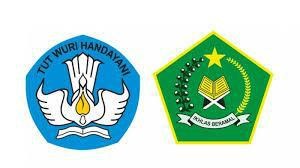
UNIVERSITY DIRECTED BY THE MINISTRY OF EDUCATION AND CULTURE VS THE MINISTRY OF RELIGIOUS AFFAIRS
Penulis: Alya Hasna Firdaus
Alya Hasna Firdaus
In the context of higher education in Indonesia,
the Ministry of Education and Culture (MoEC) and the Ministry of Religious
Affairs (MoRA) have different roles and functions. Universities under the
Ministry of Education and Culture usually focus on the development of knowledge
and a broader curriculum. Whereas universities under the Ministry of Religious
Affairs focus more specifically on religious education and character
development.
The differences in programs between universities
managed by the Ministry of Education and Culture (MoEC) and the Ministry of
Religious Affairs (MoRA) reflect the vision and goals of each ministry in
developing the education system in Indonesia.
As we know that the
Ministry of Education and Culture oversees more universities than the Ministry
of Religious Affairs, there are certainly many differences in the things and
opportunities provided by these two university administrators. In addition,
students often do not know the difference between universities under the
auspices of these two ministries. Therefore, many feel wrong in choosing a
university because it does not match their desires and goals.
Different
Programs
The Ministry of Education and Culture and the
Ministry of Religious Affairs both have different goals and focus on teaching
their students. The focus of the two ministries' goals is what differentiates
the programs provided. For example, the Ministry of Religious Affairs focuses
on religious education, which is oriented towards Islamic education and other
religious studies. MoEC offers a more diverse general education focus that
includes disciplines such as science, technology, arts and humanities.
Have an
overseas scholarship program
Both the Ministry of Religious Affairs and the
Ministry of Education and Culture have several excellent programs for students
on their campuses, one of which is a scholarship program to study abroad for
one semester. But although the same type of program, these two programs have
differences in terms of quotas, organizers, destination countries, and
different requirements. The scholarship program under the
Ministry of Religious Affairs is called MORA Overseas Student Mobility Awards
(MOSMA). On the other hand, the scholarship program under the Ministry of
Education and Culture is called the Indonesian International Student Mobility
Awards (IISMA).
Universities under the Ministry of Education and
Culture offer a broader and more diverse approach, covering fields such as
engineering, science, arts and humanities. With an innovative and flexible
curriculum, the university seeks to create a generation that has critical
skills and adaptability in the global era. Programs such as Merdeka Belajar and
Sekolah Penggerak emphasize the importance of learning that focuses not only on
academics, but also on character development and social skills. The Ministry of
Education also gives great support to research and innovation, facilitates
international cooperation, and offers various scholarships for outstanding
students.
On the other hand, universities under MoRA focus on
strengthening religious education, particularly Islam, with the aim of
producing graduates who are not only academically educated, but also have a
deep understanding of religious values. Programs such as the Outstanding Santri
Scholarship and curriculum development that emphasizes religious moderation
demonstrate MoRA's commitment to educating a generation that is tolerant and
open to differences. In addition, community service activities based on
religious values encourage students to make positive contributions to society
while applying religious teachings.
Thus, the two ministries,
while having different focuses, both play an important role in creating a
quality educational environment. MoEC emphasizes innovation and general
education, while MoRA emphasizes religious and moral education. Cooperation and
integration between these two approaches is essential to produce a generation
that is not only knowledgeable, but also has good morals, critical thinking,
and is ready to face global challenges. In the context of Indonesia's diverse
society, a balance between general and religious education can contribute
significantly to harmonious and sustainable social development.