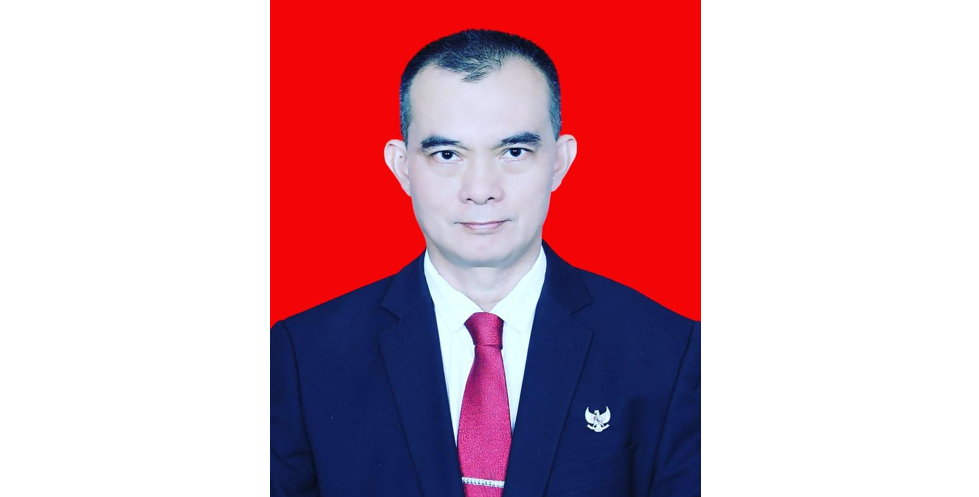
Dynamics of Thinking About the Dimensions of the Education Cost Budget in the Modern Education System
Penulis: Riskiyah Pajriatul Amaliya

Riskiyah Pajriatul Amaliya
By Riskiyah Pajriatul Amaliya
Postgraduate Student of
Reg.IIB Class UIN Sunan Gunung Djati Bandung
The phenomenon
of education costs continues to increase, quality demands are getting higher,
while budget constraints for educational institutions demand efficient,
transparent, and sustainable financial management. The
assumption is that the management of the education budget that is appropriate,
accountable, and needs-based is believed to be able to improve the quality of
education services and the effectiveness of the modern education system. However, there are still problems / gaps There is
still a mismatch between the real needs of education and the budget allocation,
lack of transparency, and the lack of optimal management of modern education
costs. Purpose of the writing Analyze the
dynamics of thinking regarding the dimensions of the education cost budget to
find an effective, efficient, transparent, and sustainable cost management
approach. Let's look at the four pillars
of Dynamics of Thinking About the Dimensions of the Education Cost Budget in
the Modern Education System as follows:
First, in
the context of the dynamics of thinking about the dimension of the education
cost budget in the modern education system, the education budget is no longer
seen as just an operational cost, but as a strategic investment in human
resource development. In the economic dimension, Human Capital Theory
emphasizes that education is a productive investment that improves human
quality and economic growth. In the social and justice dimension, the education
budget plays a role in ensuring equal access to education for all people.
Furthermore, the effectiveness and efficiency dimensions emphasize the change
from input-based budgeting to outcome-based budgeting. In
addition, the source of education financing involves joint responsibility
between the government, the community, and students as stipulated in the Law of
the Republic of Indonesia Number 2 of 1989.
Second,
in the context of the dynamics of thinking about the dimension of the education
cost budget in the Modern Education System, the concept of education costs is
understood more comprehensively. Direct costs include expenses that
directly support the learning process such as educators' salaries, facilities,
books, and educational facilities. Meanwhile, indirect costs (indirect or
opportunity costs) are related to economic opportunities lost when a person
chooses to pursue education. Therefore, the dynamics of modern education
financing thinking emphasize the importance of considering the balance between direct
costs and indirect costs in formulating fair and sustainable
education policies.
Third, in the study of the
dynamics of thinking about the dimensions of the education cost budget in the
modern education system, the education budget includes three main dimensions.
First, investment costs for facilities and infrastructure to improve the quality
of education. Second, operational costs such as educator salaries and teaching
materials that support the learning process. Third, personal costs borne by
students and affect access to education.
Fourth, in
the study of the Dynamics of Thinking about the Dimension of the Education Cost
Budget in the Modern Education System, education financing faces various
challenges such as limited funds, inequality of allocation between regions, and
budget inefficiency. In addition, the low participation of the private sector
and the paradox of free education that still burdens parents demonstrate the
need for transparent, fair, and sustainable management of education financing.
The dynamics of the education budget demand
efficient, fair, transparent, and sustainable management to improve the quality
and access to education.
*) This paper is specifically dedicated to MPI S2 Class II/B students in the Education Financing Studies course.
This manuscript is also an example of the application of argumentative essay templates used in
Even Semester 2025/2026 lectures.
iskiyah Pajriatul Amaliya, born in Manokwari on
February 5, 2002, is a student who has an interest in the development of
Islamic education management. He studied elementary education at SD Inpres 22
Prafi, West Papua and graduated in 2014, then continued his education at MTs
Pondok Pabelan Magelang, Central Java and graduated in 2017. He completed his
upper secondary education at MAN Temanggung, Central Java in 2020. Furthermore,
he studied Strata 1 in the Islamic Religious Education Study Program (PAI) at STAI
DDI Maros and graduated in 2024. Currently, he is continuing his Strata 2
studies in the Islamic Education Management Study Program (MPI) at UIN Sunan
Gunung Djati Bandung after passing the selection through the independent route.
He has an interest in developing the ability to manage educational institutions
professionally while still being based on Islamic values, and hopes to
contribute to improving the quality and management of Islamic education in
Indonesia. With the motto “Growing with knowledge, leading with values.”
This article is extracted from the teaching module of the Education
Financing Course Part 1 Teaching Lecturer Prof. Dr. H. A. Rusdiana, MM.